A cluttered kitchen can really stress you out. But, it doesn’t have to be that way. A well-organized cabinet can even boost your home’s value and make cooking easier.
Effective kitchen storage solutions can change your cooking space for the better. Simple organization tips can make your kitchen more functional and fun.

To get your kitchen tidy, start with a solid plan. First, figure out what you need. Then, use smart kitchen cabinet organization tips to use your space better.
Key Takeaways
- Assess your kitchen needs to determine the best organization strategy.
- Implement effective kitchen storage solutions to maximize space.
- Use simple steps to organize your kitchen cabinets.
- Create a functional and enjoyable cooking area.
- Maintain your organized kitchen with regular upkeep.
Assessing Your Kitchen Cabinet Needs
Understanding your kitchen cabinet needs is key to a good organization plan. This first step helps you see what your cabinets are like now. It also shows you where they need to get better.
Identifying Problem Areas and Pain Points
Begin by checking your kitchen cabinets for trouble spots. Look for clutter, hard-to-reach items, and not enough storage. Think about what you keep in your cabinets and how often you use them. This will show you exactly where you need to focus.

Taking Inventory of Kitchen Items
Listing all your kitchen items is a big part of figuring out what you need. Write down everything you have, like dishes, pots, pans, utensils, and containers for food. This list will help you figure out what to store and how to organize it well.
Setting Realistic Organization Goals
After finding problem spots and making a list, set goals for organizing. Think about what you want to achieve now and in the future. This will keep your cabinets organized for a long time.
Short-term Organization Objectives
Short-term goals might be to clean out your cabinets, start a new storage system, or change your kitchen layout. These should be things you can do in a few weeks or months.
Long-term Maintenance Plans
Having plans for the long run is important to keep your kitchen cabinets organized. Plan to clean up regularly and think about habits that stop clutter from coming back.
The Decluttering Process: Where to Begin
Decluttering is the first step to organize your kitchen cabinets. It needs patience and a plan to make your kitchen tidy and useful.
Emptying and Cleaning Cabinet Spaces
Start by emptying your cabinets. This lets you see what you have. After everything is out, clean the spaces well. Remove dust, dirt, and old glue that has built up. A clean space helps you organize better.

Sorting and Categorizing Kitchen Items
Now, sort your items into groups. Put similar things together, like baking stuff, cooking tools, and dishes. This helps you see what you have and where it should go. You’ll also figure out what you use often and what you can get rid of.
The Four-Box Method: Keep, Donate, Store, Discard
The four-box method is easy and works well. Use boxes for “Keep,” “Donate,” “Store,” and “Discard.” As you sort, put each item in a box. Think about if you really need or use it. Ask yourself, “Do I use this?” or “Is it special?”.
Making Tough Decisions on Rarely Used Items
It’s hard to decide about items you don’t use often. Think about when you last used it and if it’s still good. If it’s been a year or more, it’s probably okay to get rid of it. You can donate items that are still good.
Addressing Duplicate Kitchen Tools
Kitchens often have too many tools or gadgets. Look at what you have and keep only your favorites or the best one. It’s better to have a few good items than many bad ones.
By following these steps, you’ll declutter your kitchen cabinets. You’ll make your kitchen more organized and useful.
Essential Kitchen Cabinet Organization Tips for Every Home
To keep your kitchen tidy, organizing your cabinets is crucial. The right strategies can help you use your space better and make cooking easier.
Zone-Based Organization Principles
Zone-based organization means dividing your cabinets into areas for different items. For instance, you can have zones for baking, cooking, and storage. This makes finding what you need quicker.
Frequency-of-Use Placement Strategy
Another smart strategy is to place items based on how often you use them. Put your most used items where they’re easy to reach. Store less used items in harder spots.
Vertical and Horizontal Space Maximization
To make the most of your cabinets, use both vertical and horizontal space. Think about adding stackable shelves or dividers to save space.
Using Cabinet Heights Effectively
Use your cabinet heights wisely. Store items you don’t use often at the top. Keep everyday items on lower shelves.
Implementing the “One Motion” Rule
The “one motion” rule means organizing items so you can grab them quickly. For example, keep all baking supplies in one place to save time.
| Organization Tip | Description | Benefit |
|---|---|---|
| Zone-Based Organization | Divide cabinets into zones based on item type | Easier to locate items |
| Frequency-of-Use Placement | Store items based on how often they are used | Improved accessibility |
| Vertical and Horizontal Space Maximization | Use stackable shelves and dividers | Increased storage capacity |

By following these tips, you can make your kitchen more efficient and enjoyable. Whether your kitchen is big or small, good cabinet organization can make a big difference.
Maximizing Cabinet Space in Small Kitchens
In small kitchens, every inch matters. Homeowners face the challenge of storing things without losing style or function.
Space-Saving Solutions for Limited Cabinets
It’s key to use cabinet space wisely in small kitchens. Adjustable shelving and stackable containers boost storage. Dividers and baskets help keep things organized and within reach.

Utilizing Door and Wall Space
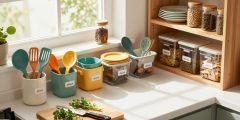
Don’t ignore the space on cabinet doors and walls. Adhesive hooks, magnetic strips, and over-the-door organizers add storage without crowding the kitchen.
Multi-Functional Storage Ideas
Multi-functional storage makes small kitchens more efficient. For example, cabinet organizers with built-in spice racks or pull-out trash cans simplify kitchen tasks.
Corner Cabinet Optimization Techniques
Corner cabinets can be tricky to use. Lazy susans or carousel units make them easier to access, turning dead space into useful storage.
Above-Cabinet Storage Opportunities
The space above cabinets is also useful. Decorative baskets or storage containers hold items you don’t use often, keeping them out of the way but still accessible.
By using these strategies, homeowners can improve their small kitchen’s organization and function. This makes the most of every cabinet space.
Best Kitchen Cabinet Organizers Worth Investing In
Investing in top-notch kitchen cabinet organizers can change your cooking space. There are many options, making it hard to choose. But, focusing on specific solutions can make your kitchen both useful and beautiful.
Shelf Risers and Expandable Organizers
Shelf risers are a simple yet effective way to use your cabinet’s vertical space. They let you double your shelf space, making things easier to find. Expandable organizers are also great, as they let you adjust the storage to fit your needs.

Drawer Dividers and Custom Inserts
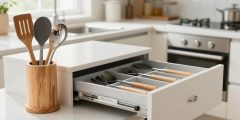
Drawer dividers keep utensils and tools organized, stopping clutter. Custom inserts fit your drawer perfectly, so every item has its place.
Pull-Out Systems and Lazy Susans
Pull-out systems make it easy to get to items at the back of your cabinets. Lazy Susans are perfect for corner cabinets, letting you grab items without stretching.
Cabinet Door Organizers
Cabinet door organizers use the space inside cabinet doors. They’re great for spices, cleaning supplies, or small items, keeping them handy.
Under-Shelf Hanging Systems
Under-shelf hanging systems add storage for mugs, utensils, or pot lids. They keep your countertops clear and your kitchen organized.
Adding these organizers to your kitchen can make it more efficient. Whether you want more storage or less clutter, the right organizers can help a lot.
DIY Kitchen Cabinet Organization Projects
With a little creativity, you can make your kitchen cabinets organized and stylish without spending a lot. DIY projects offer many ways to improve both function and look.
Budget-Friendly Organization Hacks
DIY hacks are simple and affordable. They can greatly improve your kitchen’s storage. Use adhesive hooks or magnetic strips to make the most of vertical space. This keeps things you use often within reach.
- Use the inside of cabinet doors for extra storage.
- Install shelves or baskets to organize kitchen items.
- Use stackable containers for dry goods.
Repurposing Household Items for Storage
Turning old items into storage is creative and budget-friendly. Old mason jars are great for spices or small gadgets. Cardboard boxes can become drawer dividers with some decoration.

Custom Solutions for Unique Cabinet Spaces
Every kitchen has special cabinet spaces needing custom solutions. For example, a pull-out drawer is perfect for pots and pans. A lazy Susan can make corner cabinets more useful.
DIY Drawer Dividers
Making your own drawer dividers is easy. You’ll need wood or cardboard. Measure your drawers, cut the material, and assemble the dividers. This keeps utensils and tools tidy.
Homemade Shelf Liners and Labels
Make your shelves look better with homemade liners and labels. Use decorative paper or contact paper for liners. Create labels with a label maker or by hand to show what’s on the shelf.
- Choose materials that are easy to clean and last long.
- Go for a uniform design for a neat look.
- Change your labels with the seasons to match your storage needs.
Pantry Organization Strategies
Organizing your pantry is more than just making it look good. It’s about making meal prep easier and faster. A tidy pantry cuts down on food waste, saves time cooking, and streamlines grocery shopping.
Food Storage Container Systems
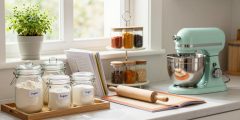
Choosing the right food storage containers is key to pantry organization. They keep food fresh and make your pantry neat. Use airtight containers for grains, pasta, and snacks.
- Airtight containers for dry goods
- Baskets for storing fruits and vegetables
- Stackable containers for maximizing vertical space
Categorizing and Labeling Techniques
Grouping similar items and labeling them is essential for a tidy pantry. This way, you can find what you need quickly. Use clear labels and sort items by type or how often you use them.
Rotation Systems for Food Items
A rotation system helps you use older items before they expire. Place new items behind older ones or use a first-in, first-out system.
Clear Container Benefits
Clear containers let you see what’s inside without opening them. This makes finding items easier. It also helps you keep track of how much food you have.

Baskets and bins are great for pantry storage. They hold snacks to cleaning supplies. Pick ones that are easy to clean and have lids to keep things fresh.
- Select baskets and bins that fit your pantry’s dimensions.
- Label each basket or bin for easy identification.
- Place frequently used items in easy-to-reach locations.
Organizing Challenging Kitchen Items
Dealing with kitchen clutter needs smart strategies for tricky items like spices and bakeware. It’s tough to organize bulky, numerous, or hard-to-store items.
Solutions for Pots, Pans, and Lids
Organizing pots, pans, and lids is easier with a pot lid organizer or a divider. This keeps them tidy and saves space.
Think about getting a pot rack to hang your cookware. This frees up cabinet space for other things. For lids, a simple organizer or rack keeps them upright and handy.
Taming Tupperware and Food Storage Containers
Tupperware and food containers can quickly mess up your kitchen. Use a container organizer or nesting set to keep them in order.
Store your most-used containers where you can easily reach them. This makes meal prep and cleanup easier.
Spice Organization Systems
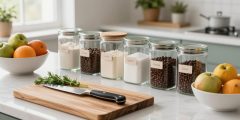
Spices are hard to organize because of their variety and need for easy access. A spice rack or turntable makes them more accessible and visible.
Bakeware and Cutting Board Storage
Store bakeware and cutting boards vertically with a divider or storage rack. This prevents clutter and uses your cabinet space well.
Small Appliance Organization
Small appliances can clutter your countertops. Use a small appliance garage or cabinet organizer to keep them out of the way but still accessible.
Here’s a comparison of different storage solutions for challenging kitchen items:
| Item | Storage Solution | Benefits |
|---|---|---|
| Pots and Pans | Pot Rack | Frees up cabinet space, easy access |
| Tupperware | Container Organizer | Keeps lids and bases together, reduces clutter |
| Spices | Spice Rack or Turntable | Easy access, visible storage |
| Bakeware | Vertical Divider | Maximizes cabinet space, reduces clutter |

Maintaining Your Organized Kitchen Cabinets
Keeping your kitchen cabinets organized is a big job. It needs effort and dedication every day. It’s not just a one-time task.
Weekly Maintenance Routines
Set aside time each week for your kitchen. This means getting rid of expired or unused items. Make sure everything is where it belongs. This stops clutter from coming back.
Quick Daily Organization Habits
Small daily habits can help a lot. For example, put dishes away right after they dry. Also, put utensils back in their place. These actions help keep your kitchen tidy.
Seasonal Reassessment Strategies
Seasonal changes are a great time to check your kitchen. Think about changing how you store things for holidays or different seasons. This keeps your kitchen organized for the new season.
Preventing Organizational Backsliding
Stay on top of your kitchen’s organization. Check your habits regularly and make changes if needed. This keeps your kitchen cabinets tidy and clutter-free.
Involving Family Members in Maintenance
Get everyone in your family involved in keeping the kitchen organized. Give each person a task. This way, everyone helps and feels responsible.
Conclusion
A well-organized kitchen comes from good tips and regular upkeep. By using the strategies from this article, you can have a kitchen that’s easy to use. It makes cooking and meal prep a lot easier.
To keep your kitchen tidy, make cleaning and organizing a habit. Regularly clean, tidy up, and check food expiration dates. This helps you use your storage space better and keeps cabinets neat.
Organizing kitchen cabinets takes time and effort. But with the right tips, you can make your kitchen work better for you. Whether you need more storage or just want to organize, find a system that fits your needs.
Keeping your kitchen organized brings many benefits. It reduces stress and boosts productivity. So, start making your kitchen more organized today. Use these tips to reach your kitchen goals.