Are you tired of looking at stains on your countertops? Stains from coffee spills or grease can be a big problem. They not only ruin the look of your kitchen but also can be unhealthy.

Removing countertop stains is simpler than you might think. With the right tools and products, you can make your countertops shine again. This article will show you how to effectively remove countertop stains and keep them away.
Key Takeaways
- Identify the type of stain on your countertop
- Choose the right cleaning product for the job
- Apply the cleaning product and let it sit
- Scrub the stain gently and rinse thoroughly
- Prevent future stains with regular maintenance
The Growing Problem of Countertop Stains in American Homes
American homes are facing a growing problem with countertop stains. These stains are not only ugly but also hard to get rid of. They not only ruin the look of kitchens but also show deeper cleanliness problems.

Recent Statistics on Kitchen Cleanliness Concerns
A recent survey found that nearly 75% of homeowners in the United States value kitchen cleanliness highly. Yet, over 60% of these homeowners find it tough to remove tough stains from their countertops.
| Cleanliness Concern | Percentage of Homeowners |
|---|---|
| Countertop Stains | 60% |
| Kitchen Sink Hygiene | 45% |
| Floor Cleanliness | 30% |
Why Modern Lifestyles Lead to More Challenging Stains
Modern lifestyles make countertop stains more common. Frequent cooking with oils and spices can cause tough stains if not managed right. Knowing these reasons is key to finding good kitchen cleaning tips and a detailed stain removal guide.
By understanding the causes and stats of countertop stains, homeowners can tackle countertop maintenance better. This helps keep kitchens cleaner and more hygienic.
Understanding Different Countertop Materials and Their Vulnerabilities
Knowing what your countertop needs is key to keeping it clean and maintained. Each material has its own traits that impact how well it lasts and how it handles stains.
Granite Countertops: Porous Nature and Staining Issues
Granite is loved for its looks and strength, but it can stain easily. Sealing granite regularly helps a lot. A study found that granite can soak up liquids fast if not sealed right.
Regular upkeep is essential to stop stains on granite.
Quartz Surfaces: Resistant but Not Immune
Quartz is made to fight stains better than natural stone. Yet, it’s not completely stain-proof. Avoiding harsh chemicals and cleaning spills fast keeps it looking good. Experts say quartz needs less care than granite but still needs regular cleaning.
Laminate, Marble, and Other Common Materials
Laminate, marble, and others have their own weak spots. Laminate scratches easily, and marble etches from acidic things. Using the right cleaning products and methods can make these surfaces last longer. Here’s a comparison of common countertop materials:
| Material | Stain Resistance | Maintenance Level |
|---|---|---|
| Granite | Low | High |
| Quartz | Medium | Medium |
| Laminate | Medium | Low |
| Marble | Low | High |

Common Culprits Behind Stubborn Countertop Stains
Finding out what causes stubborn stains on countertops is key to a clean kitchen. Countertops face many substances every day. Knowing what they are can help you clean stains well and keep your kitchen clean.
Food-Based Stains: Coffee, Wine, and Berries
Food stains are common on kitchen counters. Stains from coffee, wine, and berries can be hard to remove if not cleaned right away.
Acidic Food Stains
Acidic foods like citrus and tomatoes can damage natural stone countertops. Cleaning them often can stop stains from lasting.
Tannin-Based Stains
Tannin-rich drinks like coffee and tea can leave tough stains. Using a coaster and cleaning spills fast can help avoid these stains.
Oil and Grease Marks
Oil and grease are common stains on countertops. They can get deep into the material, making them hard to clean. Wipe down surfaces often and use a degreaser to keep them clean.

Chemical and Product Stains
Chemicals and personal care items can stain countertops too. Be careful where you put these items and make sure they’re sealed well to avoid spills.
Household Cleaners Gone Wrong
Some household cleaners can harm countertops or leave stains. Always check the label to make sure it’s safe for your countertop.
Cosmetic and Personal Care Products
Cosmetics and personal care products like nail polish and hair dye can stain. Keep these items away from counters and clean spills right away to prevent stains.
Essential Supplies for Effective Countertop Stain Removal
To remove stains from countertops, you need the right cleaning products and tools. You’ll need both commercial cleaners and common household items to tackle tough stains.
Must-Have Commercial Cleaning Products
For hard-to-remove stains, use commercial cleaners made for your countertop type. Some effective options include:
- Granite and natural stone cleaners
- Quartz surface cleaners
- Laminate countertop cleaners
These cleaners are made to get rid of stains without damaging your countertops.
Household Items That Double as Stain Removers
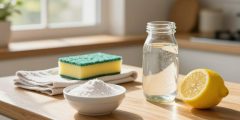
Some household items can also fight stains. Baking soda, white vinegar, and lemon juice are great for removing stains. They work well alone or together on different types of stains.

Get Rid of Countertop Stains with These Steps: The Basic Process
Removing countertop stains needs the right steps. You can get a clean surface by knowing the stain type and using the right DIY methods.
Initial Assessment and Preparation
First, figure out what your countertop is made of. Materials like granite, quartz, or laminate need different cleaning ways. Identify the stain to know if it’s from food, oil, or chemicals. This helps you choose the right cleaning method.
Get ready to clean by collecting soft cloths, gentle cleaners, and any special products for your countertop. For home remedies for countertop stains, baking soda and vinegar are good choices.
General Cleaning Technique
Begin with a gentle cleaning method for most stains. Use a small amount of cleaner or your home remedy on the stain. Rub it gently with a soft cloth, starting from the outside. For hard stains, let the cleaner sit for a few minutes before wiping.
- For food-based stains, a baking soda and water mix works well.
- Oil-based stains need a degreaser or oil removal product.
- Chemical stains might need a special product for chemical residue removal.

Post-Cleaning Care and Protection
After cleaning, rinse the area well and dry it with a clean towel. To avoid future stains, apply a sealant if needed. Regular cleaning and deep cleaning keep your countertops looking good.
By following these steps and using the right techniques, you can remove stains and keep your kitchen beautiful. Regular care and the right products prevent stains and keep your countertops in top shape.
Removing Stains from Granite Countertops
Removing stains from granite countertops needs a careful yet effective method. Granite, being a natural stone, can easily get stained. Knowing the right techniques and products is key for successful stain removal.
Specialized Techniques for Natural Stone
When tackling stains on granite, using methods made for natural stone is crucial. The poultice method is especially good for deep stains.
Poultice Methods for Deep Stains
A poultice is a paste made from a cleaning agent and an absorbent material. It’s applied to the stain, covered, and left to dry. The poultice pulls out the stain from the granite, helping to remove it completely.
Sealing After Stain Removal
After removing the stain, sealing the granite is vital to prevent future stains. Sealing fills the granite’s pores, making it more resistant to spills and stains. Regular sealing is important for granite maintenance.
Products to Avoid with Granite
Not all cleaning products are good for granite countertops. Avoid harsh chemicals, abrasive cleaners, or acidic substances like citrus or vinegar. They can damage the stone or etch its surface. Instead, use gentle, pH-neutral cleaners made for natural stone.

Tackling Tough Stains on Quartz and Engineered Surfaces
Removing tough stains from quartz and engineered surfaces can be tough. But, there are effective ways to do it. Quartz countertops are durable and look great, but they need proper care to stay that way.

Safe and Effective Methods for Manufactured Countertops
When facing stains on quartz and engineered surfaces, it’s key to use safe and effective cleaning methods. Stay away from harsh cleaners or scrubbers, as they can harm the surface. Instead, choose gentle cleaning products made for these materials.
Gentle cleaning techniques often include a mix of soap and water or special cleaners that won’t harm the surface. For hard stains, try a poultice of baking soda and water. Let it sit, then rinse it off.
Addressing Stubborn Marks Without Damage
Stubborn marks on quartz can be removed with the right approach. For stains from heat, use a soft cloth and a gentle cleanser. Chemical stains might need a poultice or a special cleaner.
Heat-Related Stains and Damage
Heat stains happen when hot pans or appliances touch the countertop. To fix these, use a gentle cleanser and avoid rough materials that can scratch.
Chemical Reaction Stains
Chemical stains occur when certain substances react with the countertop. To tackle these, find out what caused the stain and use the right cleaner. Sometimes, a poultice can pull out the stain.
| Stain Type | Recommended Cleaning Method |
|---|---|
| Heat-Related | Gentle cleanser and soft cloth |
| Chemical Reaction | Poultice or specialized cleaning product |
| Food-Based | Soap and water or baking soda poultice |
Laminate Countertop Stain Removal Strategies
Laminate countertops are affordable and versatile, but they can get stained. They are popular in many homes for their durability and look. But, they need special care to stay looking good.

Budget-Friendly Solutions for Laminate Surfaces
Stains on laminate countertops can be removed with common items and easy steps. Mix baking soda and water to make a paste. Put it on the stain, wait a few minutes, and then scrub gently with a soft cloth or sponge.
Rinse with warm water to get rid of the stain and paste. For hard stains, try a mix of water and white vinegar. It works the same way.
Don’t use harsh cleaners or rough scrubbers on laminate. They can harm the surface. Use gentle cleaners and soft cloths to keep your countertops in good shape.
Dealing with Scratches and Deep Stains
Dealing with deep stains or scratches on laminate can be tough, but it’s doable. For scratches, use a laminate repair paste to cover the damage. For deep stains, make a poultice with baking soda and water or use a commercial stain remover.
Be patient and let the treatment work for a while. Prevention is important too. Use cutting boards and trivets to avoid scratches and stains. Clean regularly with mild soap and water to keep them looking nice.
Natural and Eco-Friendly Stain Removal Alternatives
You don’t need harsh chemicals to remove stains from countertops. Nature offers great alternatives. These methods are healthier, more sustainable, and surprisingly effective.
Vinegar, Baking Soda, and Lemon Solutions
Items in your kitchen can be powerful stain removers. Vinegar, baking soda, and lemon juice work well together. They can handle different stains.
Creating Effective Natural Pastes
Mix baking soda with water or vinegar to make a paste. This paste can remove tough stains. Apply it to the stain, wait a few minutes, then scrub and rinse.
Application Techniques for Best Results
Apply the paste or solution right to the stain. Let it sit based on the stain’s severity. Then, scrub gently with a soft cloth or sponge. Rinse with warm water to remove the stain and cleaning residue.
Plant-Based Commercial Cleaners
If you prefer something easier, try plant-based commercial cleaners. These products use natural ingredients and avoid harsh chemicals. They’re safer for families and pets.
Key benefits of natural and eco-friendly stain removal include: less exposure to toxic chemicals, a greener cleaning routine, and longer-lasting countertops.
Professional Solutions for Extremely Stubborn Stains
Stubborn stains on your countertops can be a real problem. They might need professional help. While many stains can be removed at home, some are harder to get rid of.
When to Call in the Experts
If you’ve tried many ways to remove a stain and failed, it’s time to call the pros. Also, if a stain is damaging your countertop, get expert help. Professionals have the right tools and know-how to fix tough stains without harming your countertops.
Cost Considerations for Professional Cleaning
The price of professional cleaning depends on several things. These include the countertop material, the size of the stain, and how hard it is to remove. Here’s a look at what you might pay for professional stain removal:
| Service | Average Cost |
|---|---|
| Basic Stain Removal | $100-$300 |
| Advanced Stain Removal (including sealing) | $300-$600 |
| Specialized Stain Removal (for rare materials) | $600-$1000 |
Always ask for a detailed quote before you decide. Some services might offer deals for bigger jobs. So, it’s good to ask about any discounts when you’re looking for help with your countertop stains.
Preventing Future Countertop Stains: Maintenance Tips
Stopping countertop stains before they start is easier than cleaning them up. Start with simple daily habits. These habits can greatly lower the chance of stains on your countertops.
Daily Habits That Protect Your Surfaces
Every day, you can help keep your countertops stain-free. Two habits are especially helpful.
Immediate Spill Response
Act fast when spills happen. Use a soft cloth or paper towel to clean them up right away. This stops liquids from getting into the surface.
Using Cutting Boards and Trivets
Protect your countertops with cutting boards and trivets. They prevent knife marks, heat damage, and spills. This simple action can make your countertops last longer.
Seasonal Deep Cleaning Routines
Seasonal deep cleaning is also key for your countertops. It involves more detailed cleaning and products.
| Season | Deep Cleaning Task | Recommended Product |
|---|---|---|
| Spring | Seal granite and marble surfaces | Granite Gold Sealer |
| Summer | Clean quartz surfaces with a gentle scrub | Method Squirt + Mop |
| Fall | Polish laminate countertops | Pledge Furniture Polish |
| Winter | Inspect and reseal as necessary | Stone Tech Heavy Duty Sealer |
Combine daily habits with seasonal deep cleaning. This way, your countertops stay beautiful and stain-free. Regular care is essential for enjoying your countertops for many years.
Conclusion: Maintaining Beautiful, Stain-Free Countertops
Keeping your countertops beautiful and stain-free is possible with the right steps. We’ve looked at many ways to remove stains, from home items to commercial cleaners. This article has shown you how to handle different types of stains on various surfaces.
Knowing your countertop material and the stain type is key. This knowledge helps you tackle even the toughest stains. Whether it’s granite, quartz, or laminate, quick action and the right cleaner are essential.
To keep your countertops in top shape, adopt daily habits. Wipe down surfaces after meals and do deep cleans seasonally. This way, you’ll keep your countertops looking great and enhance your kitchen’s beauty.
Removing stains from countertops takes patience and the right methods. With the advice from this article, you’re ready to tackle this challenge. Enjoy a cleaner, more welcoming kitchen.