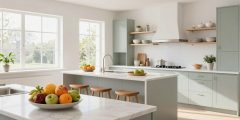
Creating a stylish kitchen configuration is more than looks. It’s about making cooking fun and improving your meal prep experience.

A well-designed kitchen is the heart of any home. It’s where memories are made. With modern kitchen planning, you can get a layout that looks great and works well.
Key Takeaways
- Understand the importance of a well-designed kitchen layout
- Explore modern kitchen planning strategies
- Discover how to create a functional kitchen space
- Learn about stylish kitchen configurations
- Find efficient kitchen layout ideas for your home
The Importance of a Well-Designed Kitchen Layout
The layout of your kitchen greatly affects your daily life and cooking experience. A well-designed kitchen is more than looks. It’s about making a space that works well, is efficient, and is fun to be in.

How Kitchen Layout Affects Daily Life
A well-laid-out kitchen changes how you do daily tasks. For example, a functional kitchen layout lets you move easily. You can get to utensils and ingredients quickly and cook well. This is key for families or people who cook a lot.
Experts say a well-planned kitchen reduces stress and makes cooking fun. “A kitchen designed with the user in mind changes cooking,” says a top designer.
The Connection Between Efficiency and Style
Efficiency and style go hand in hand in kitchen design. A kitchen that works well also looks good. Space-saving kitchen ideas help make kitchens both efficient and stylish, making them nicer places to be.
Current Trends Shaping Kitchen Design in 2023
In 2023, kitchen design is changing. Trends include practical kitchen layout solutions, adding technology, and using eco-friendly materials. For small kitchens, small kitchen design tips like using vertical space and multi-functional furniture are key.
The kitchen will keep being a key part of our homes. Its design will be crucial to our daily lives. By focusing on both efficiency and style, we can make kitchens that are not just useful but also enjoyable.
Understanding the Work Triangle Concept
In kitchen design, the work triangle is key. It makes sure the kitchen flows well. It focuses on the cooking, cleaning, and storage areas.

The Three Key Zones: Cooking, Cleaning, and Storage
The work triangle has three main zones. The cooking zone is where you cook, the cleaning zone is the sink, and storage is the fridge. These zones form a triangle in your kitchen.
Efficient kitchen design means these zones are placed right. This makes moving around easier and work flows better.
Optimizing Movement Between Zones
To make your kitchen better, the distance between zones matters. The total distance should be between 13 and 26 feet. This keeps walking short and work efficient.
Modern Adaptations of the Classic Triangle
Even though the traditional work triangle is still good, modern kitchens have changed. They add new things and make the concept fit today’s needs.
Zone-Based Planning
Zone-based planning divides the kitchen into areas for different tasks. This makes the kitchen more flexible and useful.
Activity-Centered Design
Activity-centered design goes beyond the work triangle. It focuses on the tasks in each zone. This helps create a smart kitchen layout that meets your needs.
By using the work triangle concept, you can make your kitchen better. It will improve your cooking and make the kitchen more functional.
Popular Kitchen Layout Types for Different Spaces
Different kitchen layouts meet various needs and spaces, offering unique benefits. The layout choice greatly affects the kitchen’s function and look.
One-Wall Kitchens for Compact Spaces
One-wall kitchens are great for small apartments or homes with little space. They have all the key elements on one wall, making the most of the space. This layout is not only space-saving but also cheaper to build since it needs less materials.
Galley Layouts for Maximum Efficiency
Galley kitchens, also known as corridor kitchens, have two parallel countertops with a walkway in between. They are very efficient, especially in narrow spaces, as they allow for easy movement and workflow. Galley kitchens are ideal for those who want to make their kitchen work better.

L-Shaped Kitchens for Corner Optimization
L-shaped kitchens use two adjacent walls to form an L shape, offering lots of counter space and storage. This layout is great for making the most of corners and can fit kitchens of all sizes. L-shaped kitchens also help in moving around the kitchen smoothly, making them a favorite among homeowners.
U-Shaped Designs for Abundant Counter Space
U-shaped kitchens have three walls of cabinets and countertops, forming a U shape. They provide a lot of counter space and storage, perfect for those who need a lot of room for cooking and food prep. U-shaped kitchens also help in moving around the kitchen efficiently and can handle multiple cooks.
Island and Peninsula Layouts for Social Cooking
Island and peninsula layouts add extra countertops and storage, either as a freestanding island or a peninsula attached to the main counter. These layouts are great for social cooking, offering a central spot for food prep, cooking, and entertaining.
| Layout Type | Space Suitability | Key Benefits |
|---|---|---|
| One-Wall | Compact spaces | Space-efficient, cost-effective |
| Galley | Narrow spaces | Highly efficient, easy workflow |
| L-Shaped | Various sizes | Corner optimization, smooth workflow |
| U-Shaped | Larger kitchens | Abundant counter space, efficient workflow |
| Island/Peninsula | Larger kitchens | Social cooking, additional counter space |
Efficient Kitchen Layout Ideas for Small Spaces
Creating a functional kitchen in a small space is a challenge. But, the right design strategies can help. In tight kitchens, using every inch is key for both function and style.
Vertical Storage Solutions
Using vertical space is a smart way to store more in small kitchens. Tall cabinets that go up to the ceiling offer lots of storage for items you don’t use often. They keep things out of the way but still easy to reach.
Wall-mounted shelves and pot racks also help. They keep countertops clear and make the kitchen feel more open.

Multi-Functional Furniture and Fixtures
Choosing multi-functional furniture and fixtures is smart for small kitchens. For example, a kitchen island can be counter space and a dining area. Drop-leaf tables or foldable countertops offer flexibility. They let you expand your workspace when needed and fold it away when not.
Space-Saving Appliance Placement
Where you place appliances is crucial in small kitchens. Using compact appliances or integrating them into cabinets saves counter space. A microwave drawer under the counter is both handy and space-saving.
Innovative Corner Utilization Techniques
Corners are often wasted in kitchen design. But, they can be great for storage. Using carousel units or lazy susans in corner cabinets makes it easier to get to items in the back. This maximizes the often-wasted corner space.
By using these efficient kitchen layout ideas, homeowners can make a functional and stylish kitchen, even in the smallest spaces.
Maximizing Storage in Any Kitchen Configuration
An efficient kitchen layout is more than just where you put appliances. It’s also about how you use storage. Good storage solutions can greatly improve your kitchen’s function and feel.
Cabinet Organization Strategies
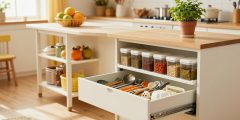
Getting the most out of your cabinets is crucial for a tidy kitchen. Use adjustable shelves and drawer dividers to tailor your cabinets. Also, think about adding cabinet organizers like baskets, bins, and turntables to boost storage.
Utilizing Wall Space Effectively
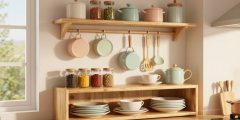
Wall space is often wasted in kitchens. Adding wall-mounted shelves or pot racks keeps essentials within reach. It also keeps countertops free. Don’t forget magnetic strips for spices, knives, or other metal items.

Hidden Storage Solutions
Hidden storage can transform your kitchen. Look into hidden compartments or secret drawers for valuable or less-used items. Appliance garages also help keep countertops clear and your kitchen looking neat.
Drawer Dividers and Custom Inserts
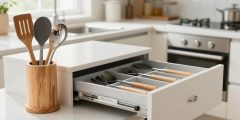
Drawer dividers and custom inserts keep utensils and tools in order. Customizable drawer organizers make the most of drawer space. They help you find what you need quickly.
By using these storage tips, you can make your kitchen more efficient, organized, and enjoyable. Whether your kitchen is small or large, the key to success is in how you use storage.
Ergonomic Considerations for Comfortable Cooking
Ergonomics are key in kitchen design. They affect how we cook and use our kitchen space. An ergonomic kitchen layout helps reduce fatigue and boosts efficiency while cooking.
Optimal Counter Heights and Depths
Countertop height and depth are crucial in ergonomic kitchen design. Counters that are too high or too low can strain the back and shoulders. The best counter height is usually between 34 and 36 inches, but it can change based on your height and what you like.
- Think about adjustable or custom-height counters for more flexibility.
- Make sure there’s enough space between the countertop and any overhead cabinets.
Accessible Storage Placement
Having storage that’s easy to reach is key for a smooth kitchen workflow. This means putting things you use often in spots that are easy to get to.
- Put heavy items at waist level to cut down on strain.
- Use pull-out shelves and lazy susans to make the most of corner cabinet space.

Reducing Strain with Smart Layout Choices
A well-thought-out kitchen layout can greatly reduce physical strain. Think about the “work triangle” concept, which puts the sink, stove, and fridge in spots that cut down on walking.
- Avoid narrow paths that can cause jams.
- Make sure there’s enough light to avoid eye strain.
Age-in-Place Design Principles
Using age-in-place design principles makes your kitchen work for you as you get older. This includes features like comfortable working heights, handles that are easy to grip, and non-slip floors.
- Think about installing lever handles on faucets and cabinets.
- Use non-slip materials for countertops and floors.
Lighting Strategies to Enhance Kitchen Functionality
Good lighting can make a kitchen feel welcoming and useful. The right lighting makes the kitchen look better and work better too.
Task Lighting for Work Areas
Task lighting is key for areas like countertops and sinks. Under-cabinet lighting is great for these spots. It cuts down shadows and makes things clearer.
Ambient Lighting for Overall Illumination
Ambient lighting brightens up the whole kitchen. It makes the space feel cozy. You can use ceiling lights or LED panels for this.

Accent Lighting for Style and Function
Accent lighting draws attention to special parts of the kitchen. This could be island countertops or artwork. It adds beauty and interest.
Energy-Efficient Lighting Solutions
Choosing energy-saving lights is smart. LED bulbs use less power and last longer. They’re a wise choice for saving money and the planet.
| Lighting Type | Purpose | Examples |
|---|---|---|
| Task Lighting | Illuminates work areas | Under-cabinet lighting, pendant lights |
| Ambient Lighting | Provides overall illumination | Ceiling fixtures, LED panels |
| Accent Lighting | Highlights specific features | Spotlights, LED strips |
Technology Integration in Modern Kitchen Layouts
Smart kitchen technology is changing how we cook and live at home. It makes our kitchens more functional, efficient, and stylish. As tech gets better, adding smart features to our kitchens is key.
Smart Appliances and Their Space Requirements
Today’s kitchen appliances do more than just cook. They bring technology into our daily lives. For example, smart fridges track your groceries and suggest recipes.
When planning your kitchen, think about the space needed for these appliances. Make sure they fit well and are easy to reach.
Charging Stations and Tech Zones
With more smart devices, we need dedicated spots for charging and tech use in the kitchen. This keeps things tidy and devices charged. Add USB ports and wireless charging pads to your island or countertops.

Voice-Controlled Kitchen Features
Voice-controlled features make kitchens easier to use. They include voice-controlled lights and smart speakers for recipe guidance. Think about adding these to make your kitchen more user-friendly.
Future-Proofing Your Kitchen Layout
As tech evolves, making your kitchen future-proof is important. Design a space that can handle new tech and innovations. Go for flexible layouts, lots of outlets, and room for new smart devices.
| Feature | Benefit |
|---|---|
| Smart Appliances | Enhanced functionality and efficiency |
| Charging Stations | Clutter-free environment and ready devices |
| Voice-Controlled Features | Increased accessibility and convenience |
By using these tech advancements and planning your kitchen layout, you can have a modern, efficient, and stylish kitchen. It will last for years to come.
Budget-Friendly Approaches to Kitchen Layout Optimization
You can make your kitchen more functional without spending a lot. To do this, you need to plan and get creative. But the outcome can be really impressive.
Prioritizing Renovations for Maximum Impact
With a tight budget, focus on the most important changes. The work triangle – sink, stove, and fridge – is key. It’s where you spend most of your time.
Here’s what to focus on:
- Improving lighting
- Enhancing storage
- Streamlining workflow
DIY Solutions vs. Professional Remodeling
Choosing between DIY and hiring pros depends on your skills and budget. DIY projects save money but take more time and effort.
| Aspect | DIY | Professional |
|---|---|---|
| Cost | Lower | Higher |
| Time | More | Less |
| Expertise | Required | Handled by pros |
Cost-Effective Materials That Don’t Sacrifice Quality
Picking the right materials is key for a budget-friendly kitchen. Look for cost-effective alternatives that are both durable and stylish.
Some good choices include:
- Laminate countertops
- Refinished cabinets
- Affordable tile options
Phased Implementation Strategies
Renovating in phases can help spread out costs. Start with the most important areas first. Then, move on to less critical upgrades.
By using these budget-friendly strategies, you can get a stylish and efficient kitchen without overspending.
Conclusion: Creating Your Ideal Efficient Kitchen Space
Creating an efficient kitchen is a mix of function and style. It starts with understanding the work triangle and choosing the right layout. Adding ergonomic touches makes your kitchen both beautiful and useful.
To make your kitchen more efficient, think about smart storage and using vertical space. Pick the right appliances too. With inspiration from top designers and knowing what you need, you can design a kitchen that fits your life perfectly.
Following the tips in this article will help you make a kitchen that’s fun to cook and entertain in. Whether you’re redoing your kitchen or starting fresh, aim for a balance of looks and usefulness. This way, your kitchen will be both stylish and efficient.