Did you know your home’s ground can have more bacteria than a trash can lid? It’s shocking to think about what we track into our homes daily. Using simple tricks for clean kitchen floors can help you save time and keep your space clean.

Keeping your home clean shouldn’t be hard or a constant fight against dirt. We all want a kitchen that feels fresh and inviting to guests.
These methods use simple items from your pantry. You can get a great shine without extra stress or spending a lot.
Keeping your home clean is key to a healthy home. Let’s explore clever methods to make your daily routine easier and more efficient.
You deserve a clean surface to be proud of during meals. Effective results are just a few simple steps away.
Key Takeaways
- Use natural ingredients like vinegar and baking soda.
- Sweep daily to prevent dirt buildup on tiles.
- Microfiber mops are better than traditional string mops.
- Steam sanitizing kills 99% of bacteria without chemicals.
- Treat spills immediately to avoid permanent stains.
- Routine maintenance extends the life of your ground tiles.
Why Kitchen Floor Cleanliness Matters for Your Home
Your kitchen floor’s cleanliness is key to your home’s health and look. A clean floor stops bacteria and germs from spreading, keeping everyone healthy. It also makes your kitchen look better, welcoming family and friends.
Health Benefits of a clean kitchen floor include fewer slips and no pests. Dirt and debris attract pests, which can harm your health. So, a clean floor keeps your home safe and healthy.
Also, a clean kitchen floor boosts the aesthetic appeal of your home. It shows you care about your space. A clean floor can even make your home more valuable, especially if you sell it.

To clean your kitchen floor quickly, make cleaning a regular habit. Sweep and mop daily, and deep clean weekly or bi-weekly. These best floor cleaning tips help keep your floors clean and your home healthy.
Knowing your floor type is also important for kitchen floor cleaning. Use the right cleaning methods and products. This keeps your floors clean and well-maintained, making them last longer and look great.
Understanding Different Kitchen Floor Types and Their Cleaning Needs
Different kitchen floors need different cleaning methods to stay looking good and last long. Knowing what your floor needs is key to keeping it in top shape.
Tile and Grout Cleaning Requirements
Tile and grout floors are great for kitchens because they’re tough and easy to care for. But, they need regular cleaning to stop dirt from getting stuck in the grout. A paste made from baking soda and water works well to clean the grout.
Hardwood and Laminate Floor Care
Hardwood and laminate floors warm up the kitchen but are careful with water. It’s important not to use too much water when cleaning them. Instead, use a dry mop or a damp cloth with a special cleaner for these floors.
Vinyl and Linoleum Maintenance
Vinyl and linoleum floors are tough and easy to clean. They can be kept clean with regular sweeping and mopping with a gentle detergent. For hard stains, try a mix of warm water and white vinegar.
| Floor Type | Recommended Cleaning Method | Products to Avoid |
|---|---|---|
| Tile and Grout | Regular sweeping, mopping with a mild detergent, and grout cleaning with baking soda paste | Abrasive cleaners, acidic substances |
| Hardwood and Laminate | Dry mopping, damp cloth with specific cleaning products | Excessive water, harsh chemicals |
| Vinyl and Linoleum | Regular sweeping, mopping with mild detergent, white vinegar solution for tough stains | Abrasive scrubbers, strong chemicals |

By following these cleaning tips, homeowners can keep their kitchen floors in great shape. This ensures they stay clean and last a long time.
Easy Tricks for Clean Kitchen Floors You Can Start Today
Keeping your kitchen floor clean is easy with a few simple tricks. It’s not just about looks; it’s also important for hygiene and safety. Here are some effective methods to make your kitchen floor cleaning routine easier and more efficient.
The Power of Daily Sweeping and Spot Cleaning
Daily sweeping and spot cleaning are key to a clean kitchen floor. Sweeping daily removes dirt and debris that can damage the floor. Spot cleaning helps prevent spills and stains from becoming hard to remove.
Benefits of Daily Sweeping:
- Reduces dirt and dust accumulation
- Prevents scratches on the floor
- Makes deep cleaning easier
Using Microfiber Mops for Quick Results
Microfiber mops are great for cleaning kitchen floors. They pick up dirt and grime easily and are gentle on most floors. You can use them with or without cleaning products.
Tips for Using Microfiber Mops:
- Use a microfiber mop with a machine washable head
- Avoid using fabric softener, as it can reduce the mop’s effectiveness
- Change the cleaning solution frequently to prevent dirt from being redeposited onto the floor
The Two-Bucket System for Streak-Free Floors
The two-bucket system is a professional cleaning technique. It ensures your kitchen floor is cleaned effectively without streaks. You use one bucket for soapy water and another for clean rinse water.
| Bucket 1: Soapy Water | Bucket 2: Clean Rinse Water |
|---|---|
| Fill with warm water and add cleaning solution | Fill with clean, warm water |
| Dip mop head into soapy water and wring out thoroughly | Rinse mop head in clean water to remove dirt and soap residue |

By adding these simple tricks to your daily routine, you can keep your kitchen floor clean and shiny with little effort. Remember, consistency is key to easy kitchen floor maintenance.
DIY Kitchen Floor Cleaning Solutions That Actually Work
Looking for a way to avoid harsh chemicals? DIY kitchen floor cleaning solutions are a safe and effective choice. They’re better for your family’s health and the environment too.
Vinegar and Water All-Purpose Cleaner
Mix equal parts of water and white vinegar in a bucket for a simple cleaner. It works well on many floor types, like tile, vinyl, and laminate. The vinegar’s acid breaks down dirt and grime, leaving your floors clean and streak-free.
Baking Soda for Stubborn Stains
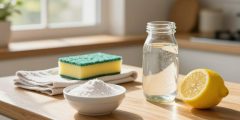
Baking soda is a strong natural cleaner for tough stains. Sprinkle it over the stain, add warm water to make a paste, and scrub with a soft-bristled brush. Let it sit for a few minutes before rinsing with warm water.
Dish Soap and Warm Water for Daily Cleaning
For daily cleaning, mix dish soap with warm water. It’s gentle on most floors. Dip your mop, wring it out, and mop your floors. This keeps them clean between deeper cleans.
| Cleaning Solution | Best For | Floor Types |
|---|---|---|
| Vinegar and Water | General cleaning and streak-free floors | Tile, Vinyl, Laminate |
| Baking Soda Paste | Stubborn stains | Most floor types, avoid on natural stone |
| Dish Soap and Warm Water | Daily maintenance cleaning | Most floor types, including hardwood and laminate |

Natural Floor Cleaning Methods for a Chemical-Free Kitchen
Switching to natural floor cleaning methods can make your kitchen healthier. These methods are effective and good for the planet. They keep your floors clean and support a sustainable lifestyle.
Effective natural ingredients for cleaning include lemon juice, essential oils, and castile soap. Let’s see how these can make your kitchen floors shine.
Lemon Juice for Shine and Freshness
Lemon juice is a natural disinfectant and deodorizer. It makes your kitchen floors smell fresh and clean. Mix lemon juice with water in a spray bottle and mop your floors.
The acidity in lemon juice breaks down dirt and grime. This makes cleaning easier.
Benefits of using lemon juice:
- Natural disinfectant properties
- Leaves a fresh and clean scent
- Environmentally friendly
Essential Oils for Antibacterial Properties
Essential oils like tea tree oil and lavender oil have antibacterial properties. They help sanitize your kitchen floors. Mix a few drops of your preferred essential oil with water and a natural soap or castile soap for a cleaning solution.
Benefits of using essential oils:
- Antibacterial and antifungal properties
- Pleasant aroma
- Can be used in various natural cleaning recipes
Castile Soap as a Gentle Cleaner
Castile soap is a gentle and biodegradable cleaner. It’s good for various floor types. It cleans kitchen floors without harsh chemical residues. Mix castile soap with warm water for a cleaning solution that’s effective yet gentle.
Benefits of using castile soap:
- Gentle on various floor types
- Biodegradable and eco-friendly
- Effective at cleaning without harsh chemicals

Using these natural cleaning methods keeps your kitchen clean and healthy. They’re good for your health and the environment. They’re a great choice over traditional chemical-based cleaning products.
Quick Kitchen Floor Cleaning Techniques for Busy Schedules
Finding quick kitchen floor cleaning hacks is key for busy homes. Homeowners need efficient kitchen floor cleaning techniques that fit into their tight schedules. This way, they can keep their homes clean without too much effort.

The Five-Minute Daily Routine
Starting a daily routine can make cleaning easier. Spend just five minutes each day on quick cleaning tasks.
- Sweep or vacuum high-traffic areas to prevent dirt buildup.
- Wipe up spills immediately to avoid stubborn stains.
- Use a microfiber mop for a quick once-over.
Strategic Cleaning Zones
Divide your kitchen into cleaning zones for better efficiency. Clean one zone at a time to keep your kitchen tidy.
- Identify high-traffic zones that need frequent cleaning.
- Clean around appliances and under furniture where dirt accumulates.
- Use area rugs or mats to protect high-traffic areas.
Preventive Measures to Reduce Cleaning Time
Preventive measures can save a lot of cleaning time. Simple habits can greatly help in keeping your kitchen floor clean.
- Place mats at entry points to catch dirt before it reaches the kitchen floor.
- Encourage family members to wipe their feet before walking on the kitchen floor.
- Regularly clean or replace floor mats to prevent dirt transfer.
By using these effective kitchen floor cleaning techniques daily, you can keep your kitchen floor clean even with a busy schedule.
Tackling Tough Stains and Spills on Kitchen Floors
Dealing with tough stains and spills on kitchen floors can seem hard. But, with the right methods, it’s easier. Kitchen floors face many substances that can leave marks if not cleaned right.
It’s important to know what kind of stain or spill you have. This helps choose the best cleaning method. Whether it’s grease, food, or drink spills, or scuff marks and sticky stuff, there’s a solution for each.
Removing Grease and Oil Stains
Grease and oil stains are hard because they go deep into the floor. First, soak up as much spill as you can with paper towels or a cloth.
For tough grease stains, try baking soda and water. Put the paste on the stain, wait 15-30 minutes, then scrub with a soft brush and rinse with warm water.
“For tough grease stains, using a degreaser specifically designed for kitchen floors can be highly effective. Always test a small area first to ensure the product doesn’t damage the floor.”
Dealing with Food and Beverage Spills
Food and drink spills are common in kitchens. They can leave tough stains if not cleaned fast. For most spills, warm water and mild dish soap work well.
For red wine or tomato sauce stains, mix equal parts water and white vinegar. Apply, wait a few minutes, then blot with a cloth.
| Stain Type | Cleaning Solution | Application Method |
|---|---|---|
| Red Wine | Equal parts water and white vinegar | Apply, let sit, blot |
| Tomato Sauce | Equal parts water and white vinegar | Apply, let sit, blot |
| Coffee | Warm water and mild dish soap | Mop or wipe clean |
Eliminating Scuff Marks and Sticky Residue
Scuff marks and sticky residue can make your floor look dirty. For scuff marks, a magic eraser works well.
To get rid of sticky residue, use a little cooking oil or WD-40. It helps dissolve the adhesive. Clean the area well after to remove any left-over residue.

Knowing the stain or spill and using the right cleaning method keeps your kitchen floor looking great. Regular care and quick action to spills prevent tough stains.
Essential Tools and Equipment for Effective Floor Cleaning
Cleaning your kitchen floor well needs the right tools and equipment. With so many cleaning products and tools out there, it’s hard to know what you really need. But, having the right gear can really help keep your kitchen floors clean and lasting longer.
Choosing the Right Mop for Your Floor Type
The mop you choose can really affect how clean your kitchen floor is. Different floors need different mops. For example, microfiber mops work great on smooth floors like hardwood and tile. But, string mops are better for textured surfaces.
“The right mop can make all the difference in keeping your kitchen floor clean and streak-free.” Think about your floor’s material and how dirty it gets when picking a mop. For daily cleaning of tile floors, a microfiber mop with a soft cleaning solution is perfect.

Vacuum Cleaners Versus Brooms
There’s a long debate about using vacuum cleaners or brooms for kitchen floor cleaning. Vacuum cleaners are great for picking up dirt, dust, and allergens, especially from carpets and rugs. Brooms, on the other hand, are good for sweeping up big debris and are often the go-to for hard floors.
Experts say vacuum cleaners are more efficient than brooms, especially for floors with detailed patterns or tight spaces. But, for daily upkeep on hard floors, a broom is simple and effective.
Steam Cleaners for Deep Sanitization
Steam cleaners are a strong tool for deep cleaning kitchen floors. They use hot steam to get rid of dirt and kill bacteria, making them great for homes with pets or allergies. Steam cleaners work especially well on tile and grout, where dirt and grime often build up.
Cleaning pros say steam cleaning is a top method for sanitizing kitchen floors without harsh chemicals. It not only cleans the floor but also keeps it shiny and durable.
Common Kitchen Floor Cleaning Mistakes to Avoid
Cleaning your kitchen floor can be simple, but mistakes can cause damage and safety issues. Knowing what to avoid is key to keeping your floor clean and safe. Let’s look at some common errors and how to avoid them.
Using Too Much Water on Certain Floors
Too much water can harm floors like hardwood and laminate. It can cause wood to warp or rot. Laminate floors can also get damaged by too much moisture.
Use a microfiber mop that’s just damp, not soaking. Dry floors well after cleaning to prevent water spots and damage.
Wrong Cleaning Products for Your Floor Type
Wrong cleaning products can damage your floors. For example, acidic cleaners can harm natural stone, and abrasive cleaners can scratch other floors.
Always check the manufacturer’s advice for cleaning products. For a natural option, try vinegar and water for tile or castile soap for hardwood.
Neglecting Grout Lines and Corners
Grout lines and corners collect dirt and mold. Not cleaning them can lead to stains and mold. Use a dedicated grout cleaner or a baking soda and water paste to keep them clean.
For corners, use a small, soft-bristled brush or an old toothbrush. This helps clean hard-to-reach areas and prevents dirt buildup.
Maintaining Spotless Kitchen Floors Between Deep Cleans
Keeping your kitchen floor clean between deep cleans needs regular effort and smart methods. Simple routines in your daily and weekly life can make your kitchen floor shine. Efficient floor cleaning techniques not only make your kitchen look better but also keep it healthier.
Weekly Maintenance Routines
Creating a weekly cleaning routine is key to a clean kitchen floor. Start by sweeping or vacuuming every day to get rid of dirt and dust. For routine floor cleaning hacks, a microfiber mop is great at picking up dirt and dust. For tile floors, a vinegar and water mix can clean the surface and grout lines well.
For hardwood or laminate floors, use a gentle cleaner made for those surfaces. Simple kitchen floor care tips include putting mats at entry points to catch dirt and moisture. Also, clean spills right away to avoid stains.
Monthly Deep Cleaning Schedule
A monthly deep clean is also important to keep your kitchen floor in top shape. This includes scrubbing grout lines, cleaning under appliances, and using a steam cleaner for deep sanitizing. For stubborn stains, efficient floor cleaning techniques like baking soda and water paste work well.
- Scrub grout lines with a brush and baking soda paste.
- Move appliances and clean underneath.
- Use a steam cleaner for deep sanitization.
Seasonal Floor Care Tips
Seasonal changes can affect your kitchen floor. In winter, moisture and salt can harm some floors. In spring and summer, pollen and dust can build up. Adjust your cleaning routine to match the season by using floor mats and cleaning more often.
In winter, use a floor cleaner that fights salt and moisture. In spring, a deep clean to remove pollen and dust will keep your floor looking and feeling great.
Professional Tips for Long-Lasting Clean Kitchen Floors
Professional cleaners know that cleaning a kitchen floor is more than just mopping. It’s about regular care, the right cleaning methods, and protection. This keeps your kitchen floor clean and durable for a long time.
Protective Measures and Floor Mats
Using floor mats is a simple yet effective way to keep your kitchen floor clean. Place mats at entry points and in front of sinks or cooking areas. This helps catch dirt and moisture before it hits your floor.
Benefits of Using Floor Mats:
- Reduces dirt and debris
- Catches spills and moisture
- Provides comfort underfoot
Proper Sealing and Finishing
For floors like hardwood or natural stone, sealing and finishing are key. Sealing protects your floor from stains and spills. This makes cleaning easier and more effective.
| Floor Type | Sealing Frequency | Recommended Finish |
|---|---|---|
| Hardwood | Every 2-5 years | Polyurethane |
| Natural Stone | Every 1-3 years | Impregnating Sealer |
| Tile | As needed (grout) | Grout Sealer |
When to Call Professional Cleaners
While regular care keeps your floor looking good, sometimes you need professionals. For tough stains, old grout, or a worn-out floor, experts can make it look new again.
Conclusion
Clean kitchen floors are more than just pretty. They keep your cooking area safe and healthy. We’ve shared many tips and methods to help you keep your kitchen floors clean.
From simple daily cleaning to using special mops and homemade cleaners, we’ve got you covered. These methods help stop dirt from building up. They also make your kitchen safer and more inviting.
By using the tips from this article, you can keep your kitchen floor clean and safe. No matter the type of flooring you have, the right cleaning can make a big difference.